Matte, Glossy, Linen, Foil Stamped: A Complete Guide to Card Game Surface Finishes
Most game designers obsess over mechanics, theme, and artwork. They spend weeks perfecting the card illustrations, agonize over the rulebook wording, and nail down the perfect player count. Then they submit their art files to the printer and—more often than not—leave the surface finish as an afterthought.
That’s a mistake. The finish on your cards affects how they feel in players’ hands, how quickly they shuffle, how long they last, and ultimately how premium your product feels. I’ve seen gorgeous artwork rendered underwhelming by a mediocre finish choice. I’ve also watched a clever finish selection elevate a modest design into something collectors want to frame.
After 19 years of running a card manufacturing facility in Shenzhen that has produced over 300 million cards for clients worldwide, we have pretty strong opinions about finishes. Let me walk you through what actually matters.
What Surface Finish Actually Does (And Why It Matters More Than You Think)
The finish isn’t just aesthetic window dressing. It’s a functional decision that affects three things: gameplay feel, durability, and perceived value.
Gameplay feel comes down to texture. A slick, glossy surface feels completely different from a linen-textured card. This impacts how easily cards slide across a table, how they shuffle, and how they stack. For games that involve a lot of shuffling—like poker-style deck games or CCGs with heavy draw mechanics—the finish directly affects playability.
Durability determines how your cards hold up over time. Some finishes offer better protection against moisture, fingerprints, and wear. If your game is meant to be played repeatedly (like a family game night staple), durability should factor heavily into your decision.
Perceived value is psychological but real. A foil-stamped tuck box signals premium. A matte finish suggests sophistication. These visual cues shape how customers value your product before they even read the rules.
Before we dive into specific options, here’s something most guides skip: the finish you choose interacts with your card stock choice. A 300gsm black-core stock with linen finish behaves differently than the same finish on a 350gsm blue-core stock. We typically recommend discussing both decisions together with your manufacturer.
[Photo: Close-up comparison of card surface textures showing matte, linen, and glossy finishes side by side]
Varnish vs Lamination: The Foundation Decision
Almost every surface treatment falls into one of two categories: varnish or lamination. Understanding this distinction helps you make better choices.
Varnish is a liquid coating applied during the printing process. It dries (or cures) to form a thin protective layer. Varnish is cost-effective and works well for standard runs, but it offers less protection than lamination and can yellow over time. We apply varnish using either silk-screen or flood-coat methods.
Lamination uses pre-made plastic films bonded to the card surface with heat and adhesive. The result is noticeably thicker, more durable, and more resistant to moisture and physical wear. Lamination costs more but extends card life significantly—laminated cards typically last 3-5x longer than varnished cards under heavy use.
For most custom card games, we recommend lamination unless you’re working with extreme cost constraints or producing a very limited run where longevity isn’t a concern.
Single-Sided vs Double-Sided Treatment
Here’s where many first-time buyers get confused. “Double-sided” doesn’t just mean both faces are treated—it means the edges are sealed too.
When we apply varnish or lamination to both sides, the coating wraps slightly around the card edges. This creates a sealed perimeter that prevents delamination (the edges peeling apart over time) and provides better moisture resistance. Single-sided treatment leaves the edges exposed, making them vulnerable to peeling and water damage.
For games that will be shuffled frequently, spilled on occasionally, or handled by younger players, double-sided treatment is worth the additional cost. Based on our production data, roughly 75% of commercial card games we produce use double-sided lamination or varnish.
Matte vs Glossy: Choosing Your Visual Direction
The matte-versus-glossy debate isn’t just aesthetic. These two finishes have different functional properties.
Matte Lamination
Matte lamination creates a non-reflective surface that feels smooth but not slippery. The texture is subtle—you can run your thumb across it and feel a slight drag, but cards still shuffle reasonably well.
The visual effect is sophisticated. Colors appear slightly muted (about 10-15% reduction in vibrancy compared to the printed file), but this often works better for artwork with complex compositions or multiple colors. Matte doesn’t glare under lighting, making it ideal for games played in varied environments.
We see matte finish chosen most often for strategy games, educational products, and tarot decks. There’s a psychological association: matte feels intellectual, serious, considered. Games like Terraforming Mars and Wingspan use matte finishes to signal depth and complexity.
Matte is also more forgiving with artwork. Fingerprints show less, minor scratches are less visible, and cards age more gracefully.
[Photo: Matte laminated card showing reduced glare under direct light]
Glossy Lamination
Glossy lamination produces a shiny, reflective surface that makes colors pop. The contrast ratio increases—darks get darker, lights get brighter. This works spectacularly well for vibrant artwork, especially illustrations with bold colors, metallic elements, or dark backgrounds.
The tactile experience is different too. Glossy cards feel slick, almost waxy. They shuffle smoothly and slide easily across surfaces. Some players love this; others find it too slippery, especially for games requiring precise card manipulation.
Glossy finish is traditional for trading card games and collectibles. There’s a psychological connection between gloss and value—holographic and foil elements appear more striking on glossy surfaces. Pokémon, Magic: The Gathering, and similar TCGs have trained consumers to associate gloss with desirable, collectible products.
The downside: gloss shows everything. Fingerprints, scratches, dust, and wear are all more visible on glossy cards. Cards tend to look “old” faster than matte equivalents.
Recycled Matte and Sustainable Options
As a BSCI audited playing card supplier with FSC certification, we field many questions about sustainable finishing options. The good news: eco-friendly finishes exist and are becoming more viable.
Recycled matte lamination uses films made from post-consumer recycled materials. Performance is comparable to standard matte, though availability can be limited and costs run 15-25% higher. Water-based varnishes offer another sustainable path, though they typically provide less durability than standard UV-cured options.
For our European clients especially, these options have become important selling points. Products with FSC-certified materials and sustainable finishes often command premium shelf placement in hobby game stores.
Embossed Textures: Linen, Basketweave, and Custom Patterns
Texture finishes add physical dimension to card surfaces through embossing. These aren’t just visual—they create distinct tactile experiences that players remember.
Linen Finish
Linen is the most common textured finish for card games. The pattern resembles woven linen fabric, with a grid of small bumps creating friction that improves shuffleability.
The texture is subtle enough that it doesn’t interfere with artwork visibility but pronounced enough to provide meaningful grip. Cards shuffle smoothly without sticking together. The finish also reduces surface glare, though not as much as true matte lamination.
We recommend linen finish for games with high shuffle frequency—anything involving poker-style hands, random card draws, or rapid deck manipulation. It strikes a good balance between feel and function.
Linen finish works on both glossy and matte base surfaces. Glossy linen (linen pattern over glossy lamination) provides the shufflability of texture with the color vibrancy of gloss. Matte linen combines the sophistication of matte with improved grip.
[Photo: Linen texture card surface under macro photography showing woven pattern detail]
Basketweave and Other Standard Textures
Basketweave uses a diamond or cross-hatch pattern. It’s slightly more aggressive than linen—more grip, more texture. Traditional playing cards often use basketweave, especially for casino or poker applications where the extra grip helps with riffle shuffling techniques.
Air-cushion finish is a specialized variation with small dimples that create pockets of air between cards. This allows cards to separate more easily, reducing the tendency for cards to stick together during shuffling or dealing. It’s popular in bridge applications.
Each texture has its advocates. We don’t have strong opinions about which is “best”—it depends on your target audience and shuffling style. A game designed for casual players who shuffle rarely might benefit from smoother texture, while a CCG played by dedicated enthusiasts who shuffle thousands of times might warrant the extra grip of basketweave.
Custom Embossed Patterns
Here’s where things get interesting. Custom embossed patterns let you create a texture that’s uniquely yours.
We’ve produced custom patterns for clients including wood grain (for a medieval-themed game), stippled patterns that mimic stone texture, and even logo-based repeating patterns. These are more expensive than standard textures but create memorable tactile experiences.
The minimum order quantity for custom embossing patterns is typically higher than standard finishes. The tooling costs also apply. We usually suggest custom patterns for established brands with significant volume commitments, though we’re happy to discuss options for lower quantities.
Foil Stamping: Adding Metallic Brilliance
Foil stamping applies a thin metallic (or pigment) layer to specific areas of your card or packaging. The result is eye-catching and unmistakably premium.
Hot Foil vs Cold Foil
Hot foil stamping uses heat and pressure to transfer foil from a carrier sheet onto your material. The foil sits on top of the surface, creating a raised, dimensional effect. Hot foil is durable, long-lasting, and creates the most dramatic metallic effect.
Cold foil applies foil during the printing process using adhesive. It’s less expensive than hot foil but creates a flatter, less dimensional result. Cold foil works best for large coverage areas and is often used in combination with other printing techniques.
For card game applications, hot foil is almost always the better choice. The dimensional quality adds to the premium feel, and cards endure enough handling that durability matters.
Gold, Silver, and Beyond
Gold foil is the classic choice for premium products. It reads as luxurious, celebratory, and valuable. We use several gold shades ranging from bright, almost-yellow gold to deep, antique gold tones.
Silver foil offers similar premium positioning with a cooler, more contemporary feel. It pairs well with blue, purple, and green color schemes.
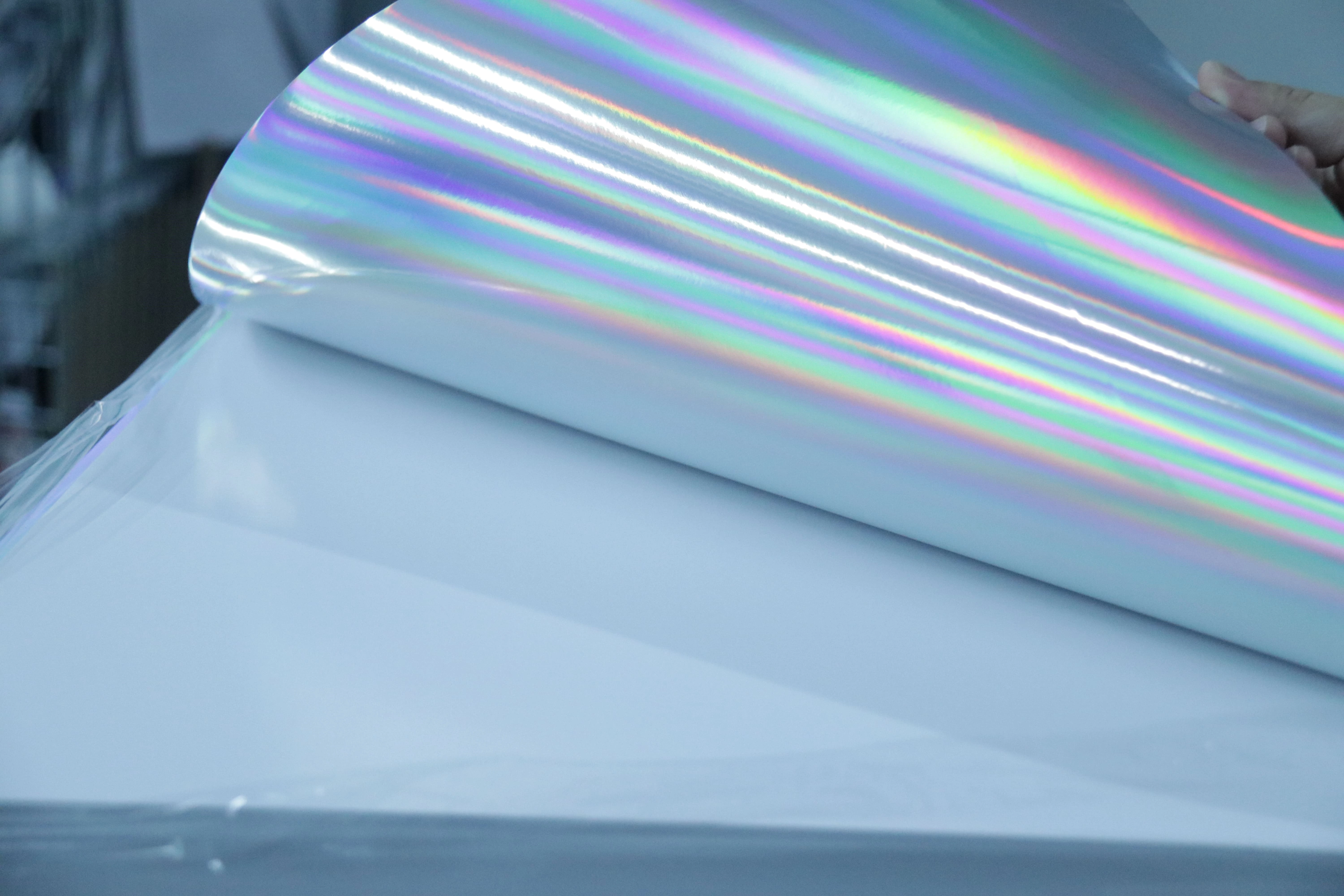
Beyond traditional metallics, holographic foil creates rainbow-shifting effects that catch light from different angles. This has become extremely popular in TCG and collectible card applications. Holographic foil signals rarity and desirability.
Colored foils—copper, rose gold, holographic rainbow—offer alternatives when gold or silver doesn’t fit your aesthetic. These are increasingly available as foil technology improves.
[Photo: Card with gold foil stamping showing light reflection on raised metallic surface]
Foil Application Considerations
Foil works best on solid areas or simple shapes. Fine text, intricate illustrations, or detailed patterns can be difficult to foil cleanly. We recommend working with your manufacturer early in the design process to determine if your artwork is suitable for foil.
The substrate matters too. Foil adhesion varies depending on your card stock and base finish. Matte-laminated surfaces sometimes require special foil types or treatment adjustments. We test foil adhesion during the sampling phase to avoid issues in production runs.
Foil can be applied to entire cards (full-card foil) or specific elements (spot foil). Spot foil—applying foil only to certain design elements—creates more dramatic contrast and often looks more sophisticated than full-card coverage.
UV Coating: Protection Meets Visual Effects
UV coating applies a liquid coating cured by ultraviolet light. The result is a hard, durable finish that’s more resistant to scratches and wear than standard varnish. UV comes in several varieties, each with distinct characteristics.
Spot UV: The Accent Player
Spot UV applies the coating only to specific design elements while leaving other areas untreated. This creates visual contrast between the coated (usually glossy) spots and uncoated (matte) surroundings.
The effect is elegant. A spot UV logo on a matte card catches light while the surrounding matte absorbs it. Text treated with spot UV becomes more legible. Borders and decorative elements pop.
We use spot UV extensively for premium products. It’s one of the most cost-effective ways to add perceived value without the expense of foil stamping.
The key to successful spot UV is registration—making sure the UV coating aligns precisely with your design. Modern equipment handles this well, but artwork preparation matters. Always provide separate spot UV files with knockout areas clearly marked.
Full UV Coating
Full UV applies the coating across the entire card surface. This provides maximum protection against scratches, moisture, and wear. The finish is typically high-gloss, though matte UV options exist.
Full UV is common for products requiring maximum durability—educational cards used in classrooms, promotional cards distributed at events, or games meant for rental libraries where cards see heavy use.
The downside: full UV can look plasticky and loses some of the sophistication of other finishes. It also tends to show fingerprints prominently.
3D UV / UV Embossing
3D UV (sometimes called UV embossing or raised UV) builds up multiple layers of UV coating to create dimensional effects. Text, logos, or design elements can be raised above the card surface, creating a tactile experience you can feel.
The effect is impressive. Cards with 3D UV elements feel like something special. The raised areas catch light differently, creating visual interest as you tilt the card.
3D UV is more expensive due to the multiple passes required and longer production time. It’s best reserved for special editions, collector products, or premium game components where the visual impact justifies the cost.
[Photo: 3D UV embossed card showing raised texture effect from angled view]
Ice Crystal UV / Cracking Effect
Ice crystal UV (also called ice UV or cracking UV) creates a distinctive cracked-ice or shattered-glass pattern when cured. The effect is crystalline, geometric, and immediately eye-catching.
This finish has become popular for fantasy-themed games, winter or ice-themed products, and anywhere you want to convey a sense of frozen beauty. It’s different enough from standard finishes that it makes products memorable.
Ice crystal UV works best as a spot treatment on specific design elements. Full-card ice crystal treatment can be overwhelming. We recommend testing samples before committing to large production runs.
Frosted Matte UV
Frosted matte UV combines the scratch resistance of UV coating with the sophisticated look of matte finish. The surface has a soft, slightly textured feel that reduces glare and hides fingerprints.
This is one of our favorite finishes for premium products where durability matters but gloss feels inappropriate. Think strategy games, deduction games, or any product where the tactile experience should feel intellectual rather than flashy.
Frosted matte UV costs more than standard matte lamination but offers superior durability. For products expected to see years of regular play, the investment often makes sense.
Reverse Varnish / Reverse Coating: The Subtle Sophisticate
Reverse varnish (sometimes called reverse coating or flood-and-spot) is the inverse of spot UV. Instead of coating specific elements, you coat everything except designated areas.
The effect is subtle but sophisticated. The varnished areas become slightly glossy while the uncoated areas remain matte. The contrast is more subdued than spot UV, creating an elegant, understated result.
We use reverse varnish when clients want visual interest without obvious “special effects.” It’s the finish choice for products that want to feel premium through restraint rather than flash.
The advantage over spot UV is lower cost and simpler production. The disadvantage is less dramatic contrast. For some products, that subtlety is exactly what you want.
Finish Combinations: Layering Effects
Here’s where experienced manufacturers earn their value. Multiple finishes can be combined on the same product, creating layered effects that no single finish achieves alone.
Common combinations include:
- Matte lamination + spot UV: The base has sophisticated matte feel while specific elements pop with gloss. This is probably the most versatile combination.
- Linen texture + spot UV: Textured base with raised gloss elements. Excellent for cards requiring grip while maintaining visual accents.
- Full matte + reverse varnish: Matte surface with subtle glossy accents. Elegant and understated.
- Foil stamping + matte lamination: Premium foil elements on a sophisticated matte base. Classic premium look.
- Linen + foil + spot UV: Maximum effect, combining texture, metallic shine, and raised gloss. Used for high-end collector products.
The constraints are practical. You can’t apply spot UV over foil—the foil won’t accept the coating properly. Some combinations require additional production steps that affect cost and lead time. Planning finish combinations early in the design process prevents costly surprises.
[Photo: Card showing combination finish with matte base, foil accents, and spot UV on specific design elements]
Finish Selection Guide: Matching Treatment to Product
With all these options, how do you actually choose? Here’s a practical framework:
Consider Your Game’s Play Style
Games with frequent shuffling benefit from textured finishes (linen, basketweave) regardless of visual treatment. The improved grip and shuffleability directly impact gameplay.
Games where cards are primarily displayed or rarely shuffled can lean toward smoother finishes where visual presentation matters more.
Match Finish to Audience
Casual/family games: Durable, forgiving finishes. Matte or linen work well. Avoid anything that shows fingerprints prominently.
Collector/TCG products: Premium finishes signal value. Foil, spot UV, and combination treatments help justify price points and create desirability.
Educational products: Durability is paramount. Full UV or double-sided lamination handles heavy use. Matte finishes hide wear and fingerprints.
Budget Reality
If budget is tight, focus on the fundamentals: good card stock with standard matte or gloss lamination. You can always upgrade packaging (where first impressions form) while keeping cards simple.
If you have flexibility, invest in finishes that differentiate. Spot UV on a key design element often delivers more perceived value than full-card treatment at lower cost.
Production Volume Matters
Some finishes have minimum quantity requirements or become cost-prohibitive below certain thresholds. Custom embossing, 3D UV, and specialized foil treatments typically require larger runs to justify setup costs.
Discuss your anticipated volume with your manufacturer upfront. We can often suggest cost-effective alternatives that achieve similar effects at your quantity level.
Card Game Surface Treatment Options: Quick Reference
| Treatment Type | Tactile Feel | Visual Effect | Durability | Cost Level | Best For |
| Matte Lamination | Smooth, non-reflective | Subdued, sophisticated | Good |  |
TCGs, collectibles, vibrant artwork |
| Linen Texture | Grippy, textured | Slightly reduced glare | Excellent | $$$ | High-shuffle games, casino applications | | Spot UV | Variable by area | Gloss accents on matte | Excellent | $$ $ | Premium products, logo emphasis |
| Foil Stamping | Raised metallic | Shiny, premium | Excellent | $ $$$ | Collector editions, special products | | 3D UV | Raised, dimensional | Textured, eye-catching | Excellent | $$ $ $ |
Fantasy/winter themes, special products |
| Frosted Matte UV | Soft, textured matte | Elegant, subdued | Excellent | $ $$$ | Premium strategy, intellectual games | | Reverse Varnish | Variable by area | Subtle gloss accents | Good | $$ $ | Sophisticated premium products |
Common Mistakes We See (So You Don’t Make Them)
Through nearly two decades of production, we’ve seen patterns in what goes wrong with finish selection:
Mismatched expectations: Clients approve digital proofs without understanding how finishes affect color reproduction. Glossy finishes increase vibrancy; matte reduces it. Always request physical samples when using a new finish.
Foil incompatibility: Trying to apply spot UV over foil or designing artwork that requires foil in registration-critical areas. Work with your manufacturer during design, not after.
Ignoring edge treatment: Focusing entirely on card faces while neglecting edge finishing. For premium products, painted edges or edge foil create strong impressions when cards are fanned or stacked.
Underestimating wear: Choosing delicate finishes for products that will see heavy use. A premium soft-touch coating looks amazing on first unboxing but shows wear quickly under heavy shuffling.
Forgetting the tuck box: The box is often the first tactile experience. A premium card finish with a cheap, flimsy box creates cognitive dissonance. Match your card finish level to your packaging quality.
Final Thoughts
Surface finishes are where good games become great products. The right finish enhances gameplay, extends product life, and communicates value. The wrong finish—even if it’s technically “good”—can undermine everything else you’ve done.
We encourage clients to think about finishes as part of the overall product experience, not as an afterthought. Come to your manufacturer with your design concept, intended audience, and budget. We’ll help you find the finish that maximizes value within your constraints.
If you’re developing a custom card game or planning your first production run, we’re happy to discuss finish options during a free consultation. Our team has experience across all the treatments covered here and can help you avoid the common pitfalls.
For tarot and oracle card projects, surface finish choice becomes even more critical—these cards are handled reverently, examined closely, and often displayed. Our tarot card printing specialists can guide you toward finishes that honor the intimate relationship people have with divination decks.
The surface is what players touch thousands of times. Make it count.